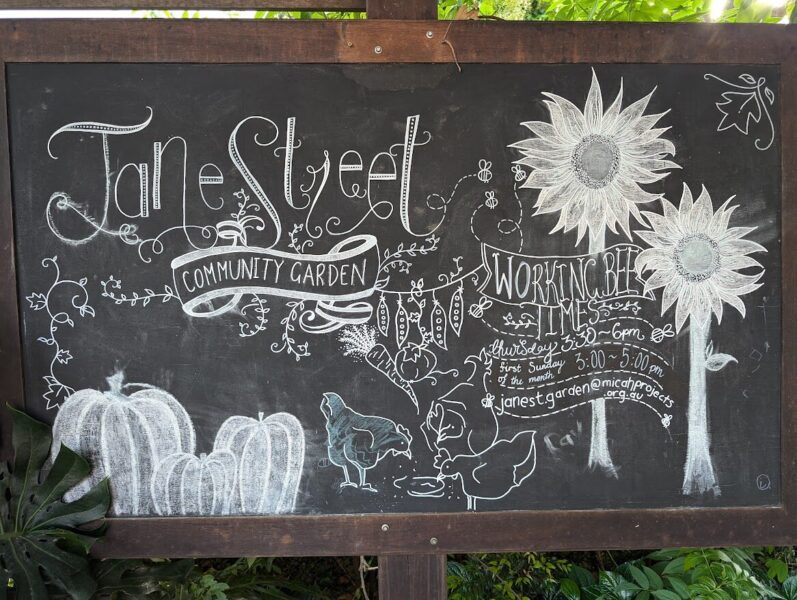
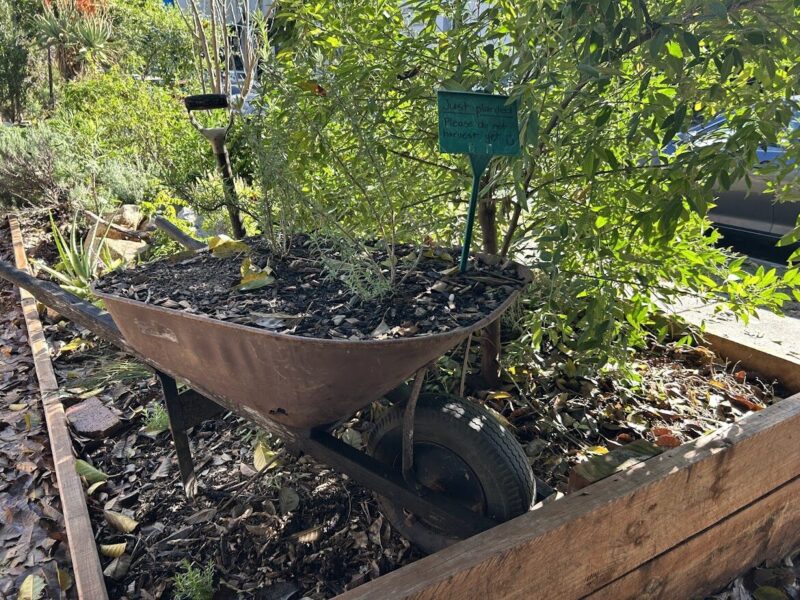
Jane Street Community Garden, located near West End Markets in Brisbane, is a thriving green space that has become a neighbourhood treasure over its 20-year history. This lovely garden is home to an abundant mix of plants, flowers, herbs, fruits, and vegetables, alongside amenities including a bee area, tap, and chill-out spaces where visitors can relax and connect with nature. The garden is funded by Micah Community Centre and the West End Markets, and is coordinated by Tom, who works 12 hours a week maintaining the space and managing volunteer activities.
The compost hub – closing the loop
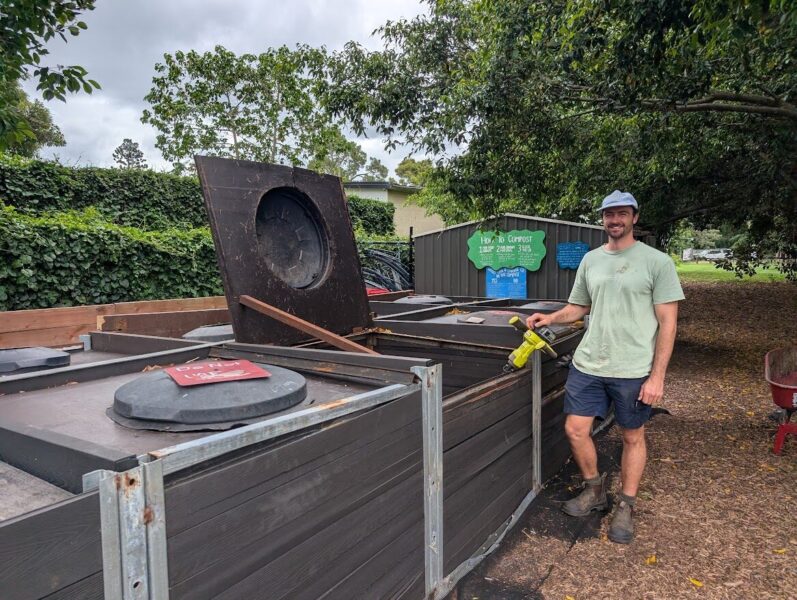
The community compost hub at Jane St is one of a network of community composting sites across Brisbane. While the garden itself has been a neighbourhood fixture for about 20 years, the composting hub underwent a significant transformation nearly two years ago, replacing the original black bins with a new system designed to be able to manage larger amounts of material in a hot composting system.
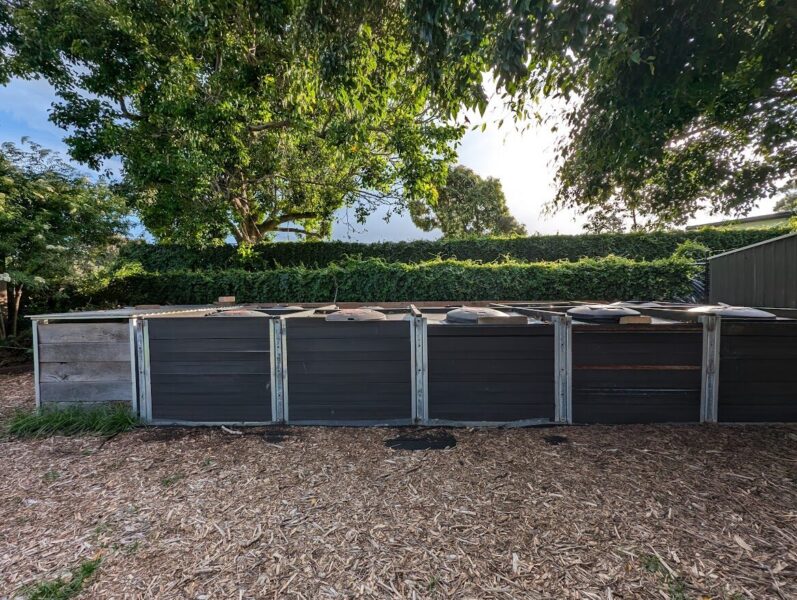
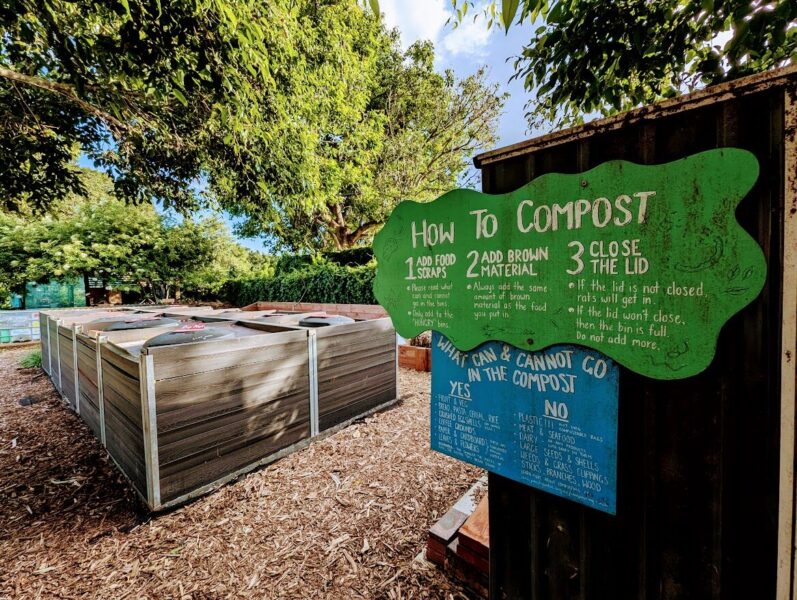
The hub’s setup is composed of ten compost bays, each approximately one square metre, arranged in a sequence. When one bay fills up, the team switches the lids to direct contributors to the next empty bay. This rotation system is designed to give each batch of organic matter the time it needs to fully break down.
Tom has spent considerable time refining the process to make it as straightforward as possible. Large, clear signs guide users through the process of adding food scraps to the bay marked ‘HUNGRY’, adding the same amount of brown material (straw or leaves provided on site), and closing the lid properly to keep out rats and other unwanted guests.
Once the compost has fully matured, it is sifted, bagged and traded for a donation. This final step completes the nutrient cycle, returning the community’s organic waste back to local gardens and creating a tangible connection between contribution and benefit.
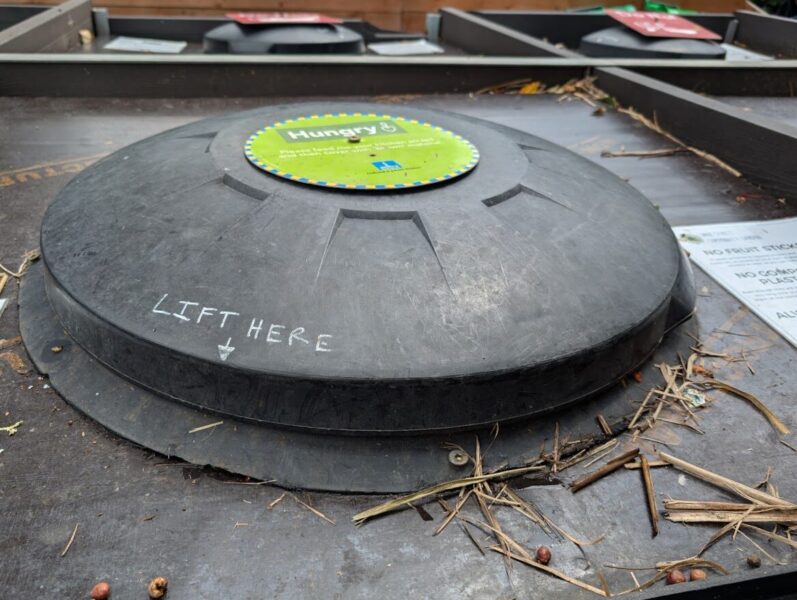
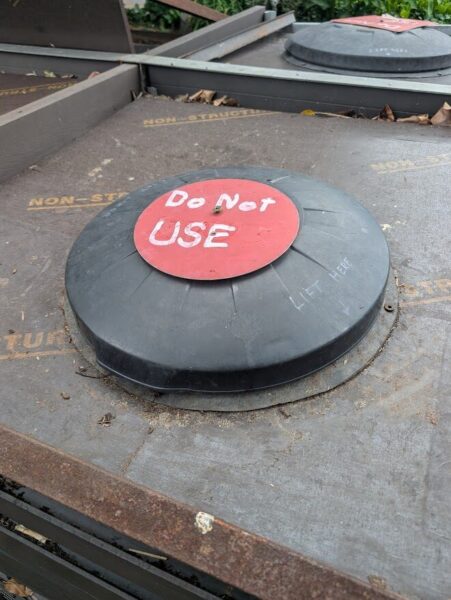
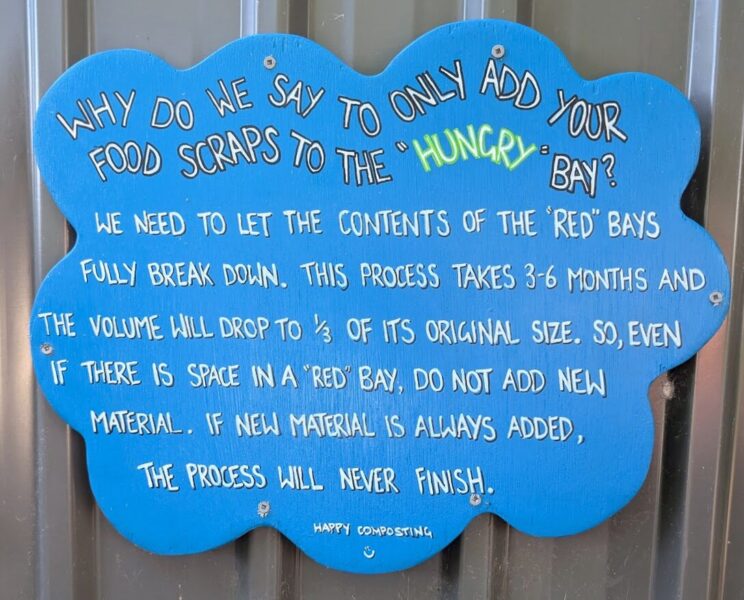
Despite the clear signage, Tom has encountered some recurring challenges. People sometimes add their scraps to any available bay rather than just the one marked ‘hungry’, which disrupts the decomposition cycle by continually introducing fresh material to batches that should be finishing their breakdown. Others arrive with large quantities of bulky garden waste from their backyards, which the system isn’t designed to handle.
Surprisingly, Tom notes that they haven’t had issues with inappropriate items like sharps or dog waste. However, compostable bags remain a persistent headache, as they don’t break down well in the system. Tom has addressed this by creating additional signs placed directly next to the lids, clearly stating: no compostable bags, no stickers, always add straw.
Who sustains community sustainability?
Beyond the practical challenges of managing what goes into the bins lies a deeper structural issue facing community composting initiatives across Australia. Managing a composting hub such as the one at Jane St is hard work – multiple hours each week are spent aerating every compost bay and ensuring the facility works properly. Yet despite providing a valuable environmental service that diverts organic waste from landfill, the hub receives no funding from council or government to manage this work.
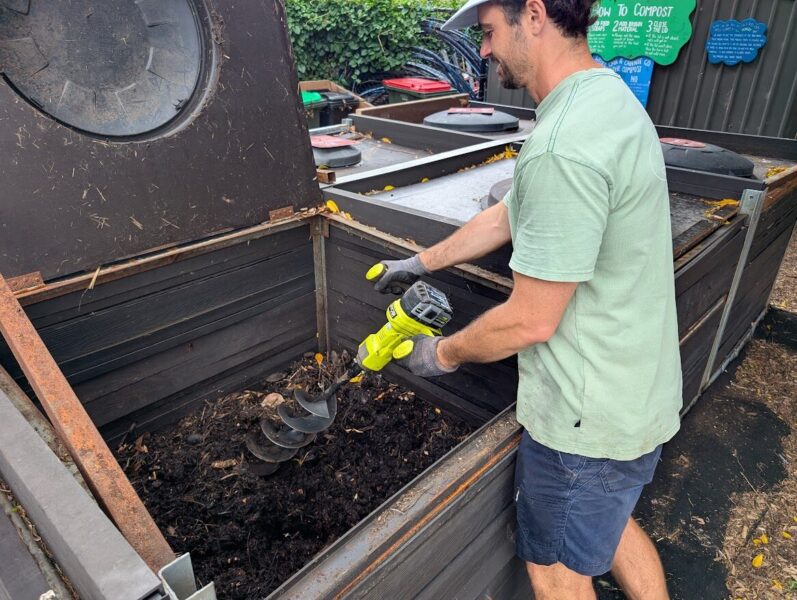
The expenses extend beyond physical labour. The hub goes through as many as ten sugarcane bales per month at $12 each to provide the brown material essential to the composting process. Therefore, the hub relies on donations from users and volunteers who attend working bees to help manage the compost.
This funding gap highlights a persistent challenge for community-led environmental initiatives – they freely give volunteer labour and expertise while receiving minimal institutional support. This raises fundamental questions about how we value and sustain grassroots environmental work in our communities.
The crew at Jane St Community Garden have built a really successful community asset that is so much more than just waste diversion. It is an experiment in collective care, where neighbours share responsibility for transforming their organic waste into valuable soil amendment.
The story of the Jane Street Community Garden composting hub is food for thought for individuals, communities, and governments. For community members, it’s a reminder that participation – through donations, attending working bees, or simply following the protocols correctly helps sustain these vital initiatives. For local governments investing heavily in FOGO infrastructure, it raises questions about why proven community-led alternatives receive little to no funding support, despite delivering environmental outcomes alongside social cohesion and local resilience. And for policymakers more broadly, it challenges the assumption that standardised, industrial solutions are the only pathway to meeting waste diversion targets. If we truly value the environmental, social and educational benefits that community composting provides, we must move beyond expecting volunteers to shoulder the burden indefinitely. Supporting these initiatives through funding, recognition, and integration into formal waste strategies isn’t just about keeping compost hubs running, it’s about building more sustainable, equitable, and connected communities.
Find out more
Find out more about Jane Street Community Garden here.

Leave a Reply