
At any community compost hub, clear and friendly signage is more than just decoration – it’s one of the most important tools we have to keep things running smoothly, reduce contamination and encourage community involvement.
- Clarity is key: Help people do the right thing
- Don’t just tell – show
- Explain the composting process
- Hand-painted, handmade and up-cycled signs
- Encourage involvement, donations and volunteering
- Show impact: make success visible
- Guide your volunteers: signage for the compost crew
When people know exactly what to do, they’re more likely to do the right thing. A well-designed sign can prevent confusion, stop contamination before it starts and even inspire someone to sign up as a volunteer.
“The single biggest problem in communication is the illusion that it has taken place” George Bernard Shaw
Not everyone knows what can and can’t go in the compost system, and the accepted items are often different from one site to the next. Composting can be confusing, especially for beginners – is it just fruit and veg? what about bokashi? Tea bags? What about compostable packaging?
Clarity is key: Help people do the right thing
Signs need to be:
- Simple and visual – Use photos or icons of what can and can’t go in.
- Localised – Reflect your hub’s rules and systems. If you don’t accept compostable bags or cooked food, make that clear.
- Multilingual (if needed) – If your community is culturally diverse, include key messages in other languages.
- Positive in tone – Say “Yes please” and “No thanks” instead of “Don’t” or “Wrong”.
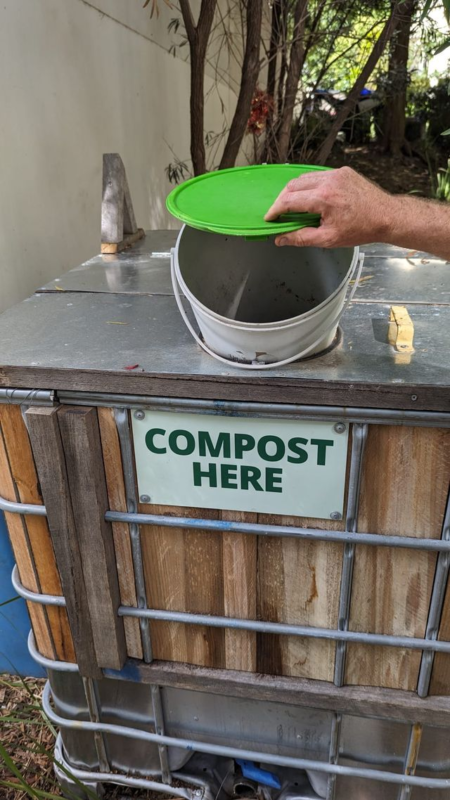

“Compost Here” signs at Kensington Compost sites

Kensington Estate Compost Hub, Melbourne

Above: Jane St Community Garden, Brisbane


Ballam Ballam Community Garden and Compost Hub at Carlton Neighbourhood Learning Centre, Melbourne. See more about them here

Joondanna Community Garden, WA.

Yarravile Community Garden, Melbourne
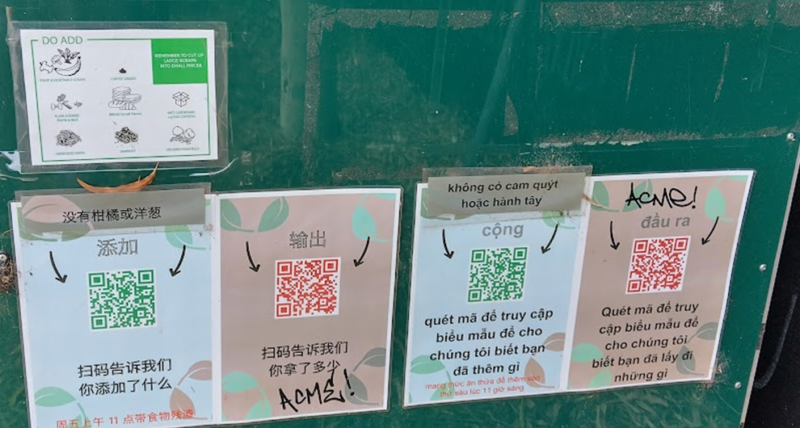
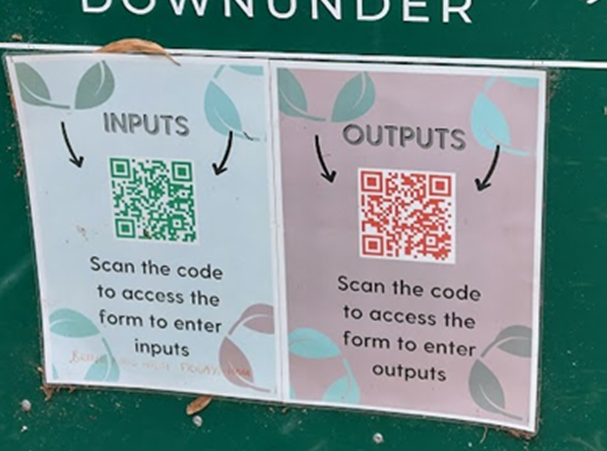
Using QR codes. North Richmond Community Health, managed by Cultivating Community, Melbourne
Don’t just tell – show
Where possible, make signs interactive or playful. For example:
- Use colour coded “hungry” and “full” (or similar wording) so people know where to add their food scraps
- Use real items glued on signs to show what can and can’t go in
- Have interactive signs


Top: Taringa Community Garden. Left: At a school in Brisbane. Right: Interactive sign encouraging people to remove plastic fruit stickers. The Pocket Community Garden, Brisbane

CHOP sign at Yarraville Community Garden, Melbourne


Brisbane City Council’s Community Compost Hubs signage for compost bin lids. Read more here
Explain the composting process
Most people don’t know what happens after they drop off their scraps. A simple sign or poster explaining what happens next builds trust and helps people feel connected to the process. People are also more likely to care and follow the rules if they see the impact.
Ideas include:
- A step-by-step diagram or timeline of the composting process at your hub.
- Photos of the finished compost being used in local gardens.
- A QR code linking to your hub’s page or social media for updates.

Joondanna Community Garden, WA.

Australian National University Kitchen Garden, ACT

Gabba Hill Community Garden, Brisbane


3 bin system displays at Brooklyn Botanical Garden, New York City


Finbar Neighbourhood Centre community compost, Melbourne
Poster at Compost Education Centre, Victoria, Canada
Hand-painted, handmade and up-cycled signs
Handmade signs add warmth, creativity and a strong sense of local identity. They show that real people, not a council or corporation, care about this place. It’s also a great way to upcycle materials lying around.
Ideas:
- Paint signs with kids, local artists or volunteers
- Include personal touches like “Made by the Tuesday Compost Crew”.
- Use reclaimed wood, chalkboards or weatherproof paint for durability.
- Celebrate diverse styles and cultures in your community.


The amazing artwork at the Gore St Community Compost Hub in Fitzroy, Melbourne, inviting people to drop off their scraps

Above: Sign made from old iron fireplace. Singleton Community Garden. More here

The “Compost Machine” signage, created by children and parents at KCCC Childcare, Melbourne.
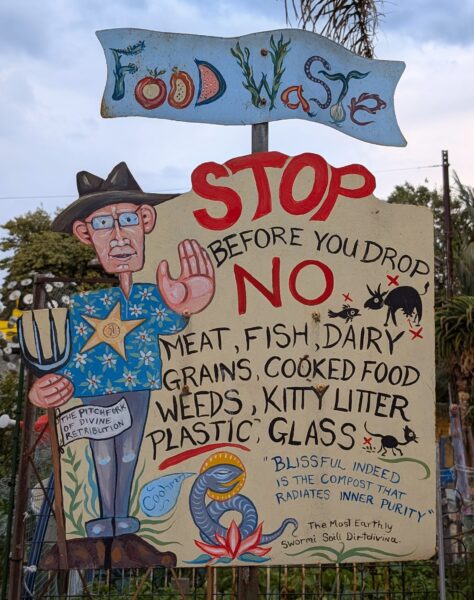
St Kilda Community Gardens, VIC
Encourage involvement, donations and volunteering
The success of community composting depends on community support and that includes people power. Use signage to make it easy for others to get involved.
Some ideas:
- A friendly “We Need You!” sign with info on how to become a compost volunteer.
- A QR code or link to your volunteer sign-up form or mailing list.
- A mini chalkboard or whiteboard that says:
“Next turning day: Saturday 9am – come along!”
“We’re looking for new compost champions – ask us how!”

Finbar Neighbourhood Centre community compost, Melbourne


Above: Kensington Town Hall Compost Hub, Melbourne

YIMBY Compost, Castlemaine, VIC. Read more here

“Feed me Seymour” – Donations box at The Pocket Community Garden, Brisbane


Compost Hub advertising on the food scrap collections trike at Carlton Neighbourhood Learning Centre, Melbourne
Show impact: make success visible
Good signage doesn’t just instruct, it also celebrates. Sharing the real-world impact of your compost hub builds community pride, motivates good behaviour and helps attract new supporters and volunteers.
Try adding a small “Compost Hub Stats” board with:
- Total kg of food waste diverted
(e.g. “We’ve saved 2,300kg of food scraps from landfill this year!”) - Where the compost went
(e.g. “Used to grow veggies at the community garden” or “Shared with 5 local households”) - People involved
(e.g. “45 local households contribute scraps weekly” or “Run by a team of 6 dedicated volunteers”)
You can also include:
- Before-and-after photos of improved soil or garden beds.
- A bar graph or compost “thermometer” showing monthly progress.

Joondanna Community Garden, WA.

Lilley Road Compost Hub, Brisbane. Read more here
Guide your volunteers: signage for the compost crew
Behind every thriving community compost hub is a team of volunteers keeping things ticking – turning piles, sifting compost, checking temperatures, managing drop-offs. Operational signage helps make their job easier (and more enjoyable) by communicating what’s what, even if no one is around to explain.
Useful volunteer-focused signs might include:
“Compost Cooking – Do not add new material”
Indicates active hot composting. Helps volunteers know to leave the bin alone or check temperatures.
“Ready for Sifting”
Clearly marks piles that are finished and waiting to be sifted. Great for new volunteers looking for a task.
“Finished Compost – Ready to Use!”
Labels the mature compost that can be collected or distributed.
“Full – Please Use Next Bin”
Helps prevent overfilling and directs both volunteers and contributors.
“Turned on (DATE) – Next Turn Due (DATE)”
Keeps track of turning schedules and makes work visible to the team.


Compost bay chalkboard signs at Kensington Town Hall Compost Hub, Melbourne. Read more here


Engraved bay numbers at McCracken Street Church Compost, Melbourne

Bay status markers at Ballam Ballam Community Garden and Compost Hub at Carlton Neighbourhood Learning Centre, Melbourne. See more about them here

The counter is moved along to show how many times the compost has been turned. Ecological Justice Hub, Melbourne.


Keep signs fresh and maintained
Signs get worn down and people stop reading them. Schedule a quick check-in every few months to check:
- Are signs faded, weather damaged or peeling?
- Have the rules changed?
- Could they use a touch-up or creative refresh?
- Do they have graffiti on them?
Use humour and fun
A bit of compost humour goes a long way! A funny sign can grab attention, make people smile, and reinforce behaviour without being preachy. Quotes can also communicate the bigger picture.


Have you got a great sign at your hub? Share it with us on Instagram or Facebook and tag #LOCCALcompost – we’d love to showcase it!
Leave a Reply